Problem
Body check behaviours validate beliefs about one's body, deepening unhealthy mindsets and self-harm behaviours. No existing product effectively reduces body checks.
Case Study
A wristband to reduce body check behaviour for anorexia nervosa population

For a class project on health and well-being, I aimed to design a product to help people with anorexia nervosa (AN) reduce body check behaviour. In 8 weeks, I gathered user needs, applied psychology theories, and designed and reiterated Wave wristband.
Body check behaviours validate beliefs about one's body, deepening unhealthy mindsets and self-harm behaviours. No existing product effectively reduces body checks.
A wristband that detects and intervenes in ongoing body check, while strengthening users' motivation to reduce the habit.
Understanding users and psychology theories shaped a wristband that reduces body check behaviour without triggering users.
I gathered users' needs by analysing Reddit posts containing "body check" in an AN subreddit. Body check behaviours included feeling one's own bones and measuring body parts with hands.
Use education and cognitive restoration to gradually reduce motivations.
Monitor and intervene in real-time body check intentions or behaviours.
Soothe negative emotions and promote positive thoughts about the self.
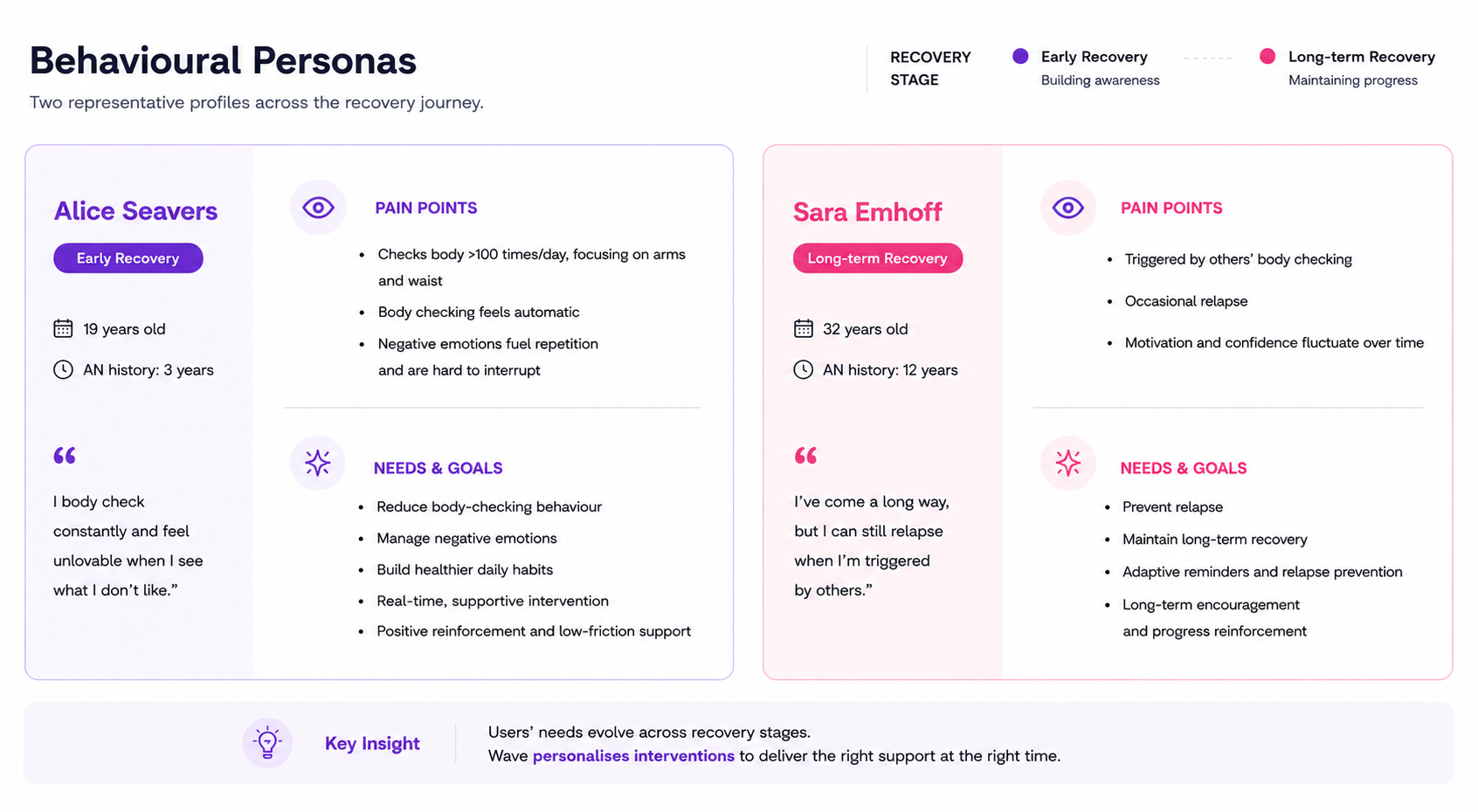
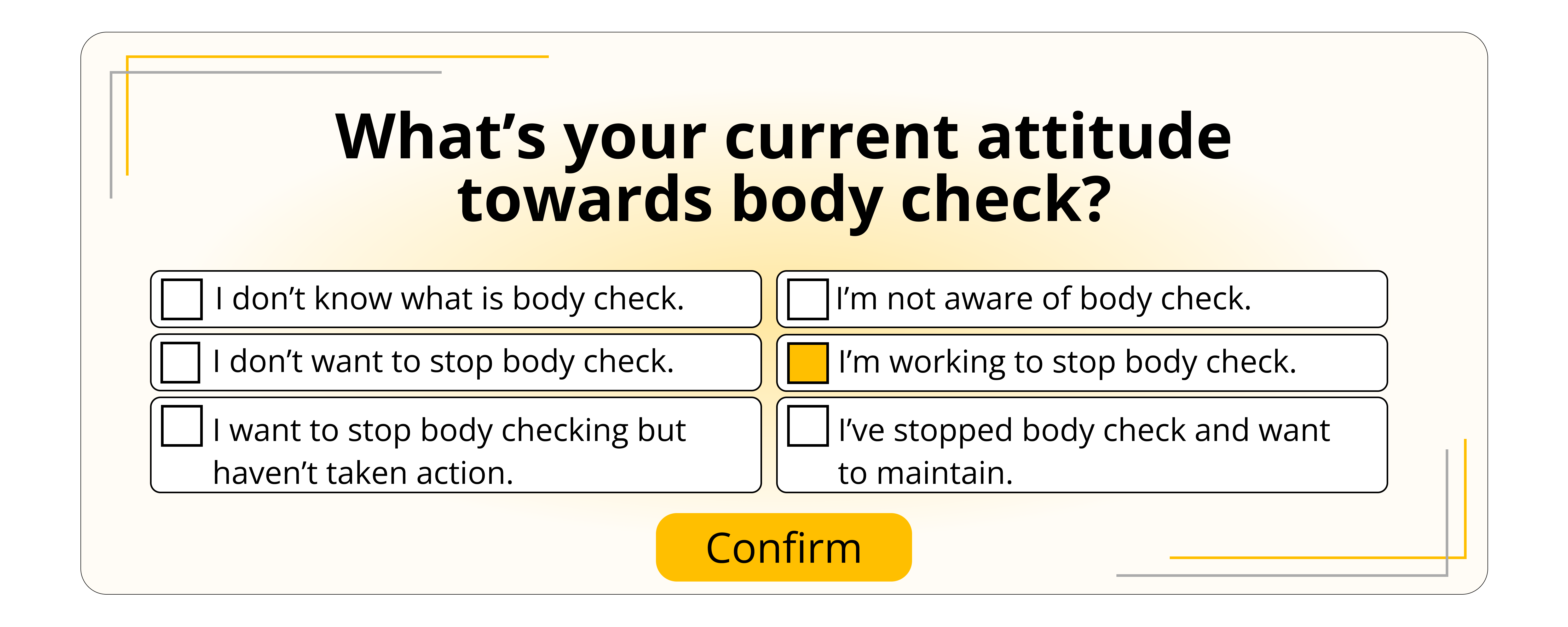
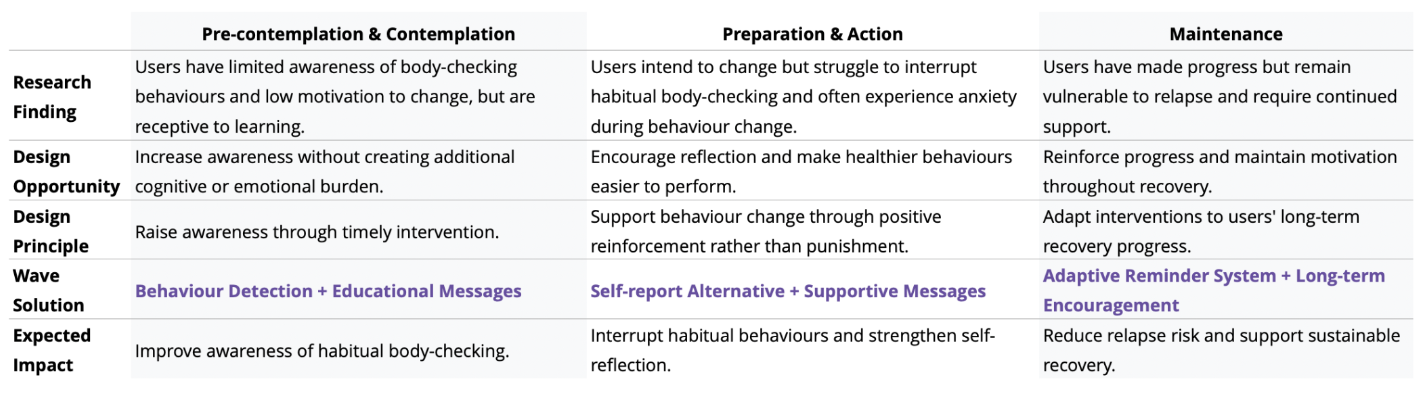
To induce behaviour change for users with different goals and pain points, I analysed users' goals and motivations using the Transtheoretical Model. Within the same detection + reminder frame, I twisted the interaction flow to target different users. Users can shift between stages according to their current body check status.
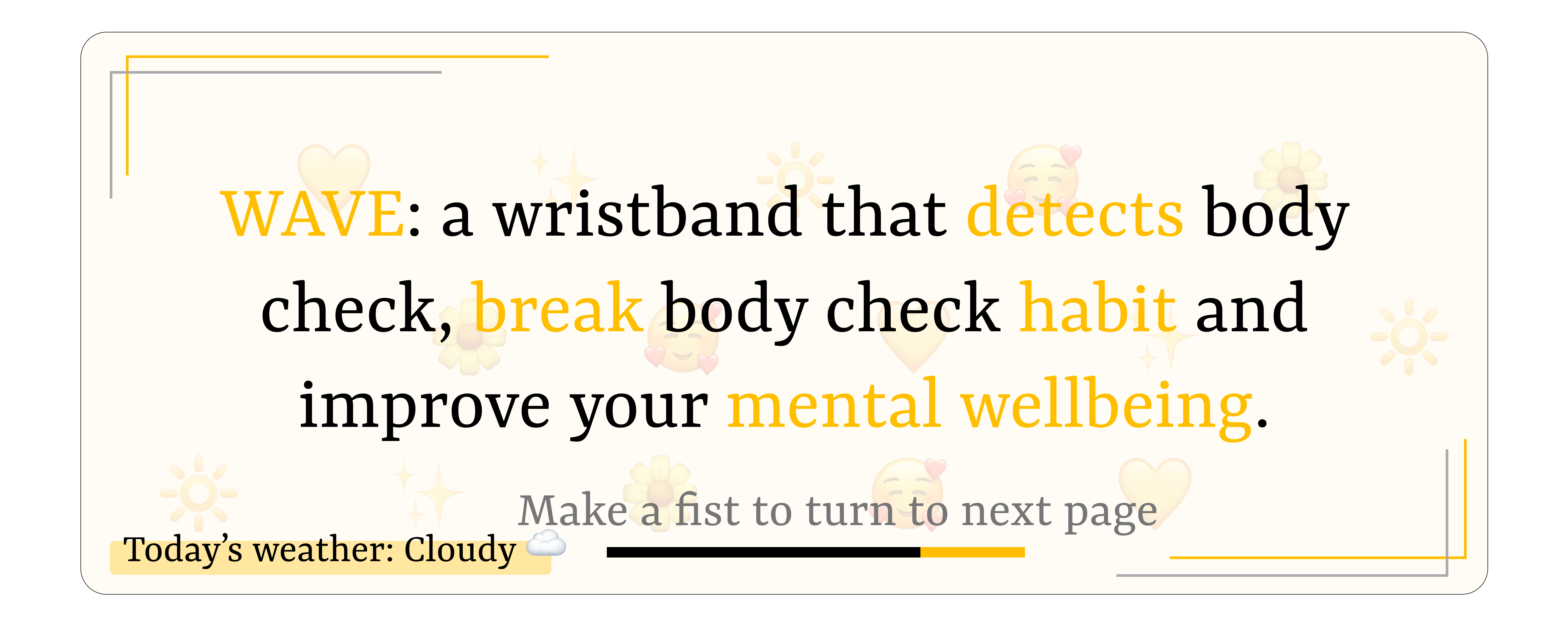
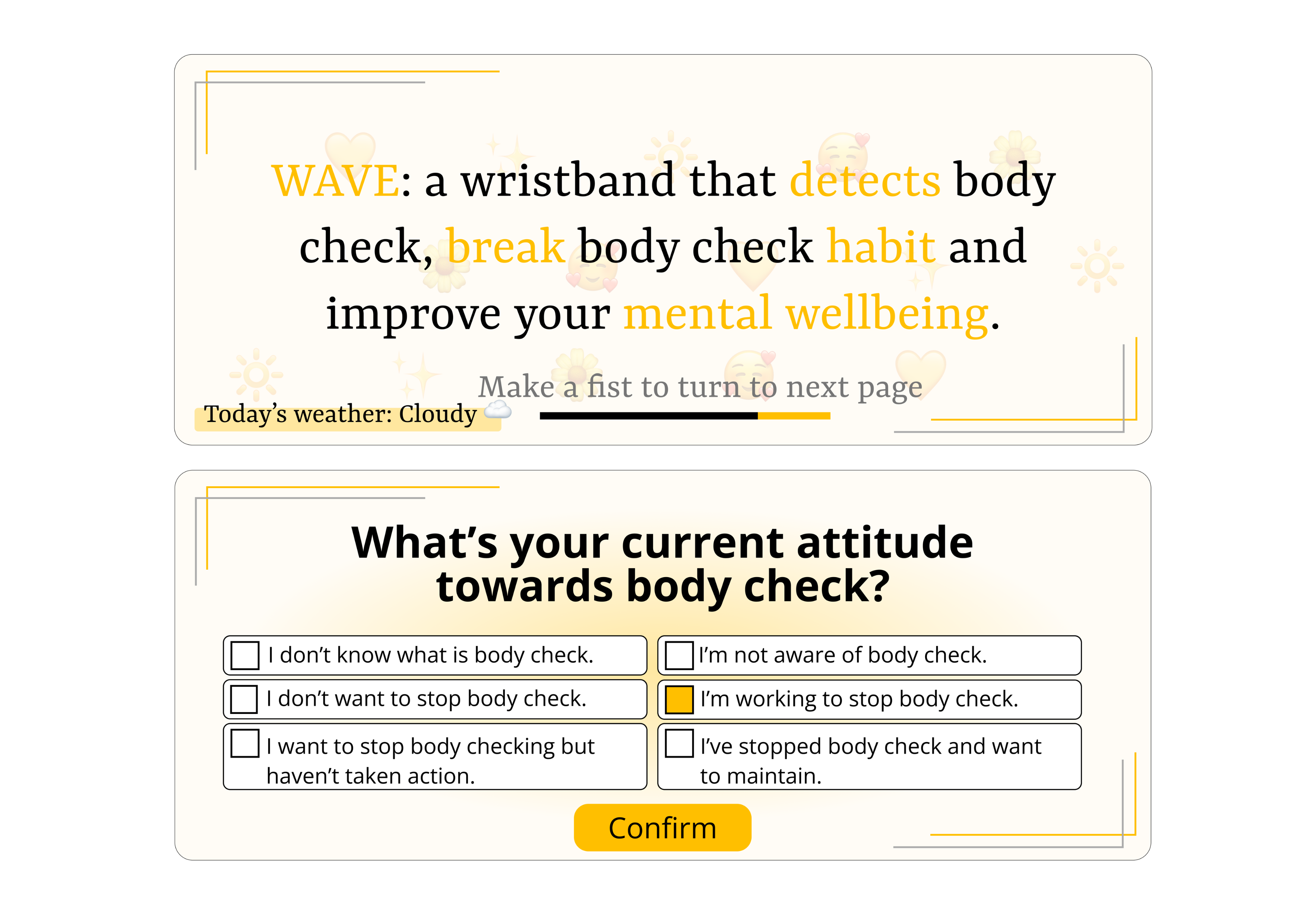
Wave is a wristband that detects and intervenes in body check behaviour and consolidates users' motivations to reduce body check habits.
People experiencing anorexia nervosa have different levels of awareness, motivation, and readiness to reduce body-checking behaviours. A single intervention cannot effectively support users throughout their recovery journey.
Wave allows users to regularly update their attitudes towards body checking. The system adapts reminder frequency and detection sensitivity to better match users' current stage of recovery.
Personalising the intervention helps reduce frustration, supports long-term engagement, and ensures the system remains relevant as users' needs change.
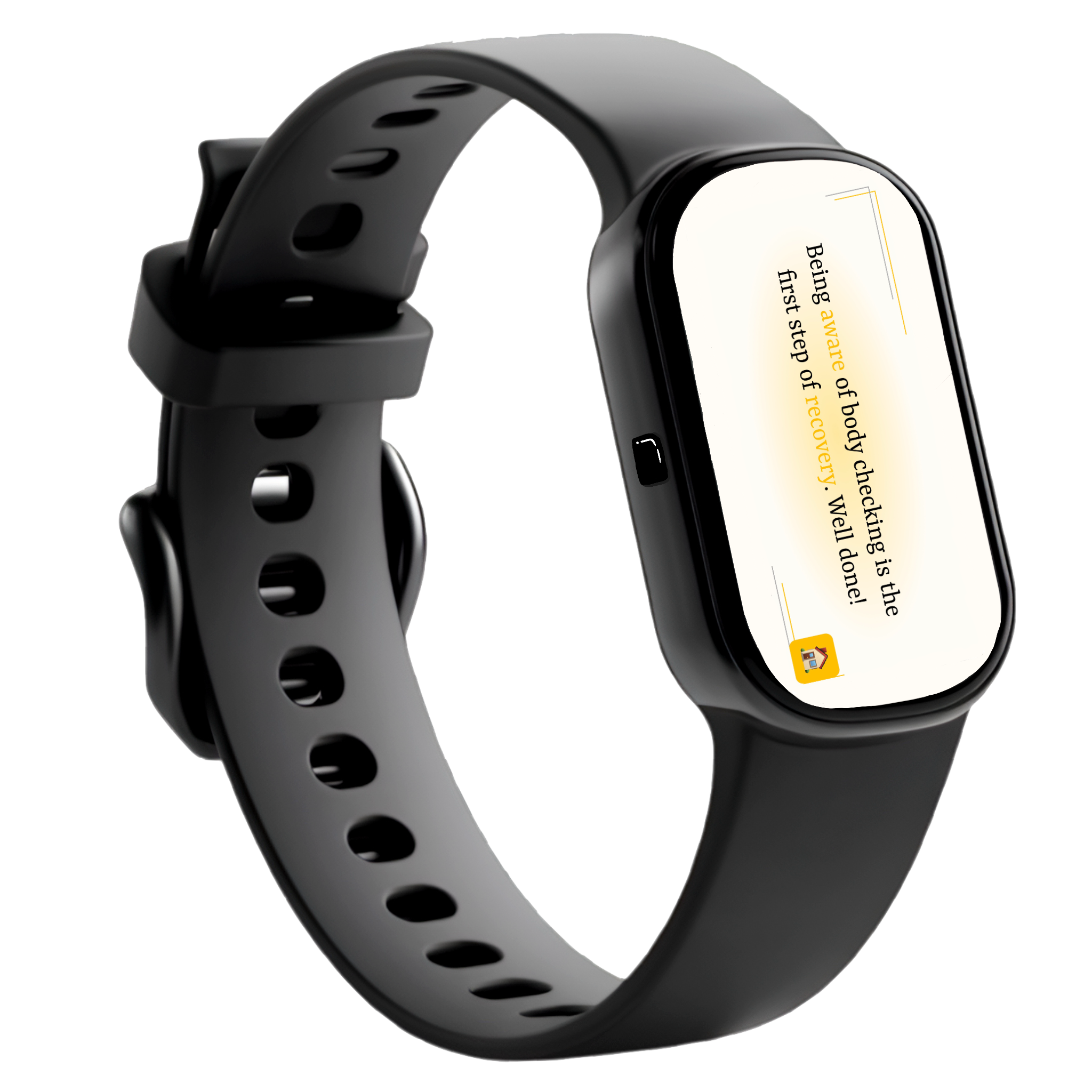
Body checking often becomes an automatic habit, making it difficult for users to recognise or interrupt the behaviour before it happens.
Wave detects body-checking gestures through wrist movement and immediately delivers haptic feedback alongside supportive prompts. Users can also self-report urges to body check.
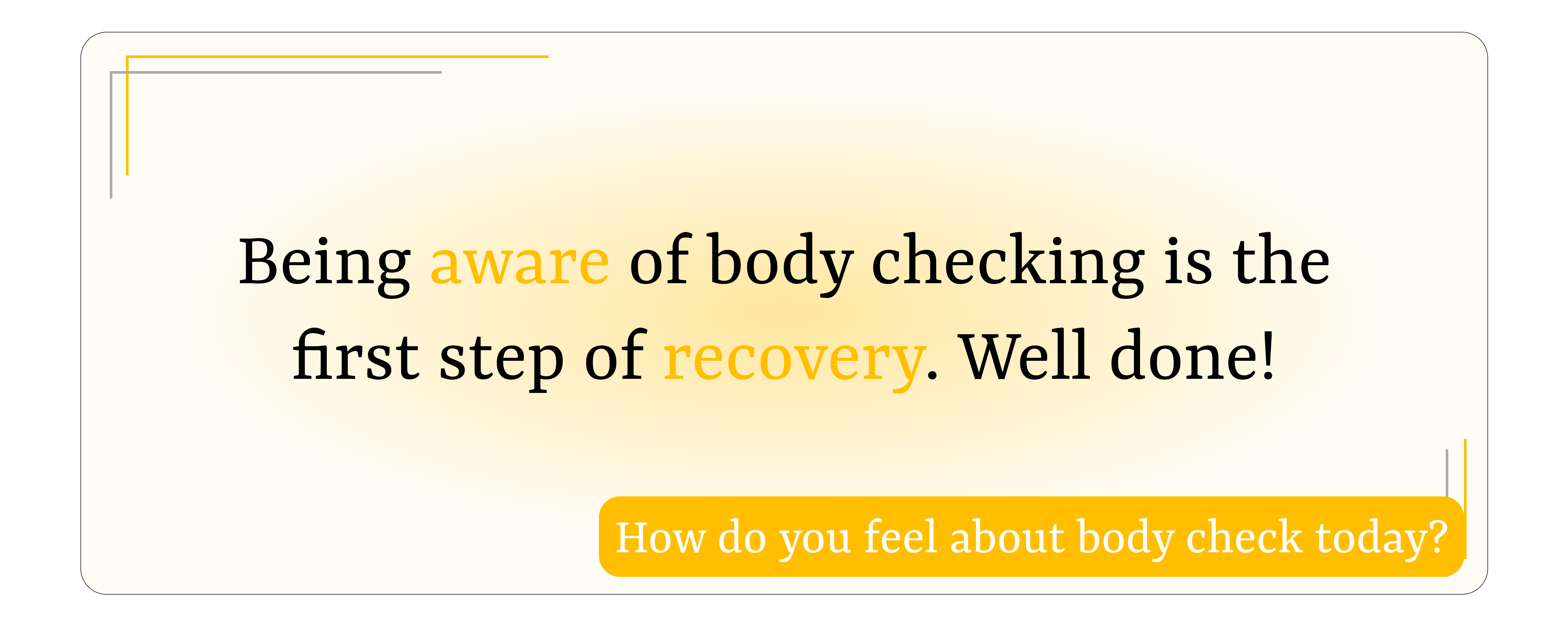
Timely intervention increases users' awareness of habitual behaviours and creates opportunities to interrupt the habit before it becomes automatic.

Reducing body-checking behaviours can be emotionally challenging, and purely corrective feedback may increase stress or feelings of failure.
Wave delivers supportive prompts that encourage reflection, self-awareness, and positive reinforcement whenever body-checking behaviour or urges are detected.
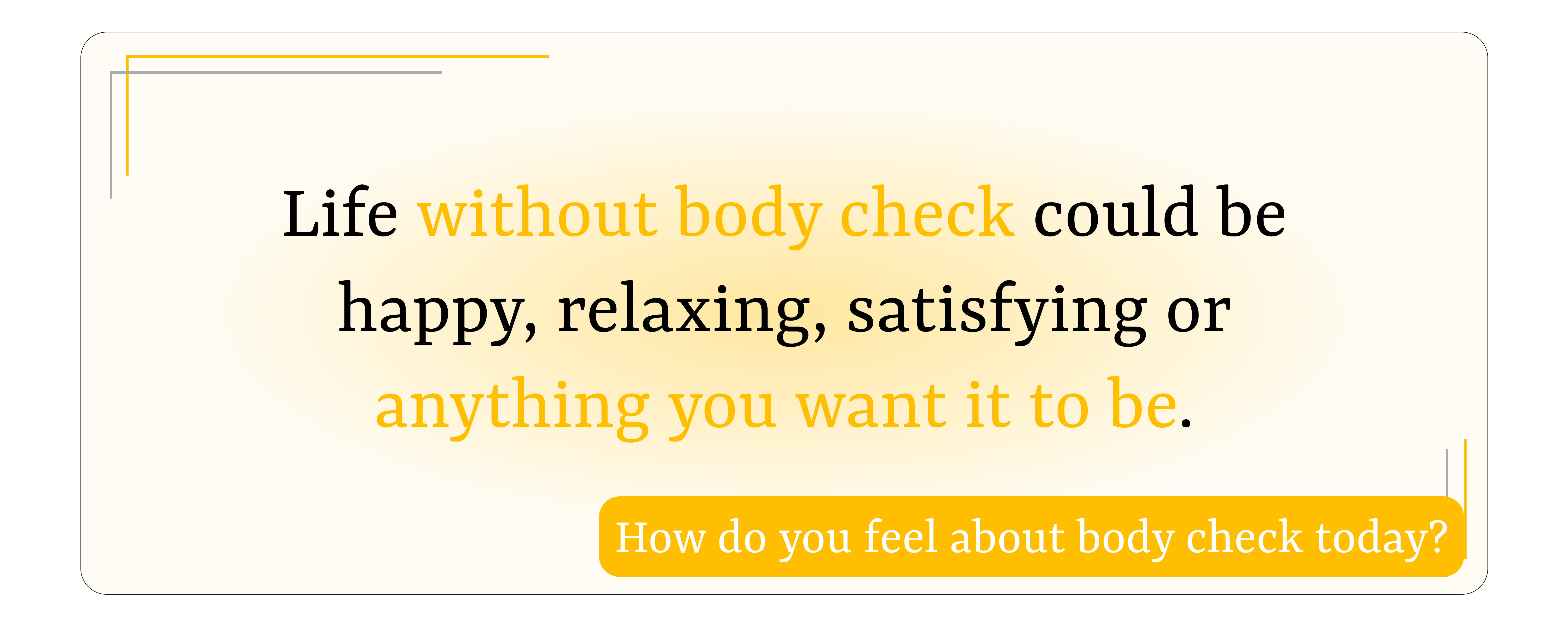
A compassionate communication style helps users feel supported throughout recovery, promoting sustainable behaviour change rather than short-term compliance.
If given another month, I would:
Designing for behaviour change is challenging. This project targets the most critical moment in the habit loop.
Wearables collect detailed embodied data. Users need clear boundaries, transparency, and control over sharing.
Motivation changes over time. Good design should respond gently through stages of the interaction cycle.
Always happy to chat about research, design, or a good mystery.